

GEAR MAINTENANCE

Most divers learn that they have to “take care of their gear” when they first start diving. However, depending on where they are, that can mean drastically different things. For some divers, they just drop their gear in the hands of dive staff post dive and they’re done, others spend the entire next day washing, sterilising, and drying gear out. But what really needs to be done? Well there are two parts; post dive care and regular maintenance. Both can vary based on what gear you have and where you dive, so let's break it down.
POST DIVE CARE
Post dive, the most important thing is to rinse your gear in fresh water. Salt water corrodes metal gear as it dries, so it is very important to get those salt crystals off your gear while it’s still wet. On non-metal parts, salt can build up making it hard to press buttons or move switches. In some extreme cases, enough salt crystals can build up that it can actually cut into your BCD’s bladder, although that is very rare. Even if you’re diving in fresh water, you should still rinse your gear to remove any dirt, silt or other debris.
REGULATORS
Starting with your regulator, ideally you’ll rinse it while it is attached to a tank and pressurised. This prevents any water from getting inside the reg. If possible, dunk the entire set up in a tub of fresh water. If you don’t have a tub, hosing it down will work. Ensure you twist your venturi level and adjustment knob (although make sure you twist them back to the position you found them) to dislodge any salt build up there.
If you can’t rinse your regs while they’re attached to a tank, make sure your dust cap is firmly in place. On DIN regs make sure the o-ring on the regulator itself is in place. On yoke regs, if your dust cap is hard plastic, make sure there is an o-ring in the o-ring groove. Some yoke dust caps are rubber so you don’t have to worry about an o-ring.

BCDs
Both the inside and outside of your BCD needs to be rinsed. To rinse the inside, simply press down on the deflate button and pour water inside. Orally inflate for a couple of breaths, then swish it around, flip your BCD over, and dump it out. Repeat a couple more times. If you find you're having a hard time pouring water down the inflator, you can also carefully unscrew one of the dump valves and pour water in from there. If you’re doing that, be very careful when screwing the valve back on, as it is a plastic thread fitting and if it is cross threaded can ruin your bladder.

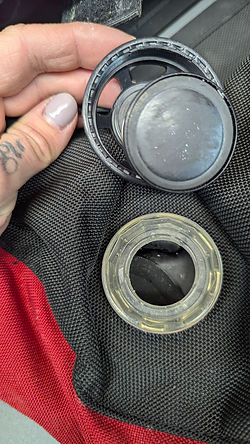
For the outside of your BCD, rinsing it in fresh water either with a hose or by dunking it in a rinse bin is usually sufficient. Make sure that however you’re doing it, you thoroughly rinse the inflator. I see many BCDs start to leak or auto inflate due to corrosion build up on the inflator. For some reason it is the most common part of your dive gear to miss getting a good rinse.
On occasion it is a good idea to get a proper BCD cleaning solution, like GearAid’s Revivex BCD Cleaner and rinse it in that. This gives your BCD a good deep clean, perfect for before putting gear away for the season, after a period of heavy use, a particularly dirty dive, or just as part of your periodical maintenance.
DRYSUITS
The easiest way to rinse a drysuit is while wearing it! If possible, stay fully in your drysuit, and get a buddy to spray you down with a hose; top to bottom, back and front. Make sure the inflator and deflator are rinsed and rotated while under the spray. Thoroughly hose down the zipper. If your suit has two zippers, unzip the top protective zipper. Empty your pockets and rinse inside the pockets. If your suit has a telescoping torso, unclip the crotch strap and pull it up so you can rinse the extra material. If you have a tub big enough, you can also just sit in the tub.
If you’ve already taken your suit off, when rinsing it make sure you’re keeping the inside dry. Hang it on a rack to rinse it, or if you have a tub, carefully hold the neck and wrist seals in one hand while using the other hand to dunk. If you do end up getting water in your suit, make sure you hang it up by its feet or use a drysuit dryer to dry out the inside. Never use heat to dry your suit as that can damage the suit.
Undergarments do not need to be washed after every dive. If your suit floods, or they start to smell, then wash them. Overwashing will break down the fibres and eventually your gear will lose some of its insulation properties. You can machine wash on a regular cycle with regular soap. Ideally hang your undergarments to dry, but if that is not an option you can use a dryer on a low heat setting. Again, the more the garments are in the dryer the more they will slowly break down, but it does take a lot of washes and drys for that to happen.
WETSUITS and OTHER NEOPRENE
The best way to rinse a wetsuit and neoprene accessories is in a tub with a wetsuit cleaner, like GearAid’s Revivex Wetsuit and Drysuit Shampoo. Your body naturally is always shedding skin and oils, and the build up of that in your wetsuit, along with salt crystals can cause some serious irritation. While rinsing in just water will get most of that off, a deeper clean with a cleaner is always best. If you’re someone that pees in your suit, then it’s mandatory. The extra minerals ending up in your suit will not only start to smell, but can cause rashes. If you’re using a tub, rinse smaller items like hoods and gloves first, then your wetsuit.
ACCESSORIES
Your electronics and cases (lights, camera, computers) should be submerged in fresh water and have all their buttons and levers pressed while still underwater. This will remove the salt in and around buttons.
Other gear like mask, fins, slates and SMBs can just be rinsed in fresh water. Unroll your SMB and thoroughly soak any spools or reels.
TANKS and WEIGHTS
Tanks and weights are often overlooked, but should still be rinsed. Many divers leave their weights in their weight pockets, however doing so can eventually cause your pocket zippers or clips to deteriorate. Remove your weights and thoroughly rinse the pockets. Rinse any weight belts or clip on weights as well.
Tanks should be rinsed, especially their valves and boots. Once you’ve rinsed them, make sure they’re stored somewhere they can dry. Many steel tanks end up with very rusty bottoms because of water getting trapped in their tank boots. When in doubt, add more holes to the bottom of your tank boot, or remove the entire thing!

DRYING

Hang your gear to dry out of direct sunlight, and out from underneath a direct lightbulb. Latex seals can melt if they are hung directly under a light. Use appropriate sized hangers for your wetsuits or drysuits, with thick shoulders. Do not use heat to dry anything and do not hang things on or around heaters. A garage or basement is ideal to hang gear, but lacking that even hanging things in your shower will do. While living in an apartment I installed a heavy duty hook into my shower’s ceiling so I could hang my drysuit. Make sure your gear is fully dried before putting it in storage, or putting regs back in reg bags. Damp gear goes mouldy!
REGULAR MAINTENANCE
As long as you’re giving your gear appropriate post-dive care, most of it doesn’t need too much regular maintenance. If you’re going on a big trip it is always a good idea to have your gear inspected prior to leaving. Your local dive shop can perform reg servicing and inspections, as well as BCD inspections and repairs.
REGULATORS
Regs need to be serviced regularly. Most manufacturers recommend every two years or 100 dives, although some may vary. On years you’re not having your reg serviced, or if you’re a seasonal / vacation diver and about to start diving again, it is a good idea to have your reg inspected by a service tech. They’ll ensure your reg is still in good order, or if it fails inspection, be able to repair the reg. Learn more about reg service’s HERE.

DRYSUITS
Drysuit zippers need to be periodically lubricated. Brass zippers need to be waxed regularly otherwise they become too stiff to move. Generally every five to ten dive days, or if the zipper starts to get hard to zip. Fully wax the entire zipper then zip it open and closed a few times to work the wax into the teeth.
Plastic zippers use a silicone based lubricant and only need to have the base, where the zipper closes, lubed. This can be done every month or so if it is being used regularly. If plastic zippers don’t get lubricated they can start to leak.


Latex seals can be treated using liquid silicone spray or drops to last longer. Simply spray or drip the product onto the seal and rub it around. This can be done every few months. Lacking the liquid silicone, many divers use talc, or baby powder, to maintain their seals. This can be applied right before use to help the seal slide on.
If you use dry gloves, most systems have an o-ring that should be periodically lubricated with silicone grease or liquid silicone. Just a light layer of grease will do the trick; too much will just make a mess.


TANKS
Every year your tank needs to be visually inspected. To do this, your local dive shop will drain the tank, remove the valve and any hardware on the tank, and then carefully examine the inside, outside, threads and valve.
Every five years tanks need to be hydrostatically tested. To do this a government approved facility will submerge the tank and fill it to 5/3 its working pressure then measure the amount of water it displaces both during and after the process. If it expands and contracts the appropriate safe amount, the tank will pass its hydro exam.
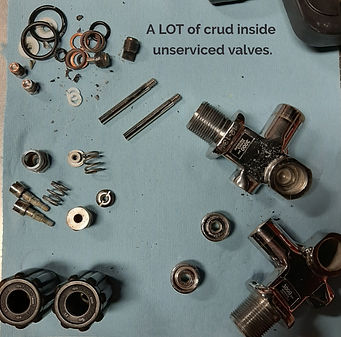
During this time it is a very good idea to get your tank valve serviced. While there is currently no industry standard for tank valve services, in my experience if you’re diving regularly, after five years the valve gets pretty gross inside. Given that generally you can’t tell there is a problem with the valve until it is leaking, it is best to do preventative care.
ACCESSORIES
Lights and cameras with o-rings or other seals should have their o-rings lubricated regularly with silicone grease. If your light has external connections for charging, they may get corroded overtime. If this is the case, you can soak the connectors for short periods in vinegar to clean them.
All your other gear is usually fine, however be sure to inspect it regularly. Masks can have mildew build up - learn more HERE - that you’ll want to clean. Shoe laces and any form of straps can get worn and may need to be replaced. Some specialty gear may have extra care instructions - like scooters and rebreathers - so make sure you check in with manufacturers recommendations!
"FIXING THINGS"
-
What happens if I get water in my regs? - If it is salt water, rinse thoroughly with fresh water, then connect to a tank and purge your regs relentlessly. Purge both second stages as well as your LPI hoses. If there is a chance the salt water has dried it will definitely need a service. It is still a good idea to service the regs anyway. If it is fresh water, put your regs on a tank and purge.
-
My BCD is auto-inflating or leaking! - When we don’t rinse our BCD inflators well enough, they can become corroded and auto-inflate, or leak. Some inflators are designed to be taken apart and serviced, others are not and must be replaced. If your BCD has the style of inflator that can be serviced you should have it done when you get your reg serviced to prevent any surprise issues.
-
I flooded my drysuit. Now what? - If your drysuit has salt water inside, you’ll want to rinse the inside as well. Open your zipper all the way and fully submerge your suit, or spray it down with a hose. To dry hang it upside down so all the water runs out.
Proper post dive care and gear maintenance prolongs the life of your gear significantly. Taking a couple extra minutes pre and post dive will save you a lot of money in the long run so it is definitely worth it. Well maintained gear is also much safer to use as less problems will occur underwater. Take the time, care for your gear.